
Introduction: Agents With Character, Not Just Capability
Tell an AI agent to act like a consultant. Tell it to behave like a tutor. Tell it to negotiate like a seasoned diplomat. These are not just instructions. They are role conditions, and they represent one of the most powerful and underutilised tools in context engineering.
Role conditioning is the practice of embedding a specific persona, goal orientation, and tone into an agent's operating context so that it behaves like a particular kind of professional, not just a general-purpose model.
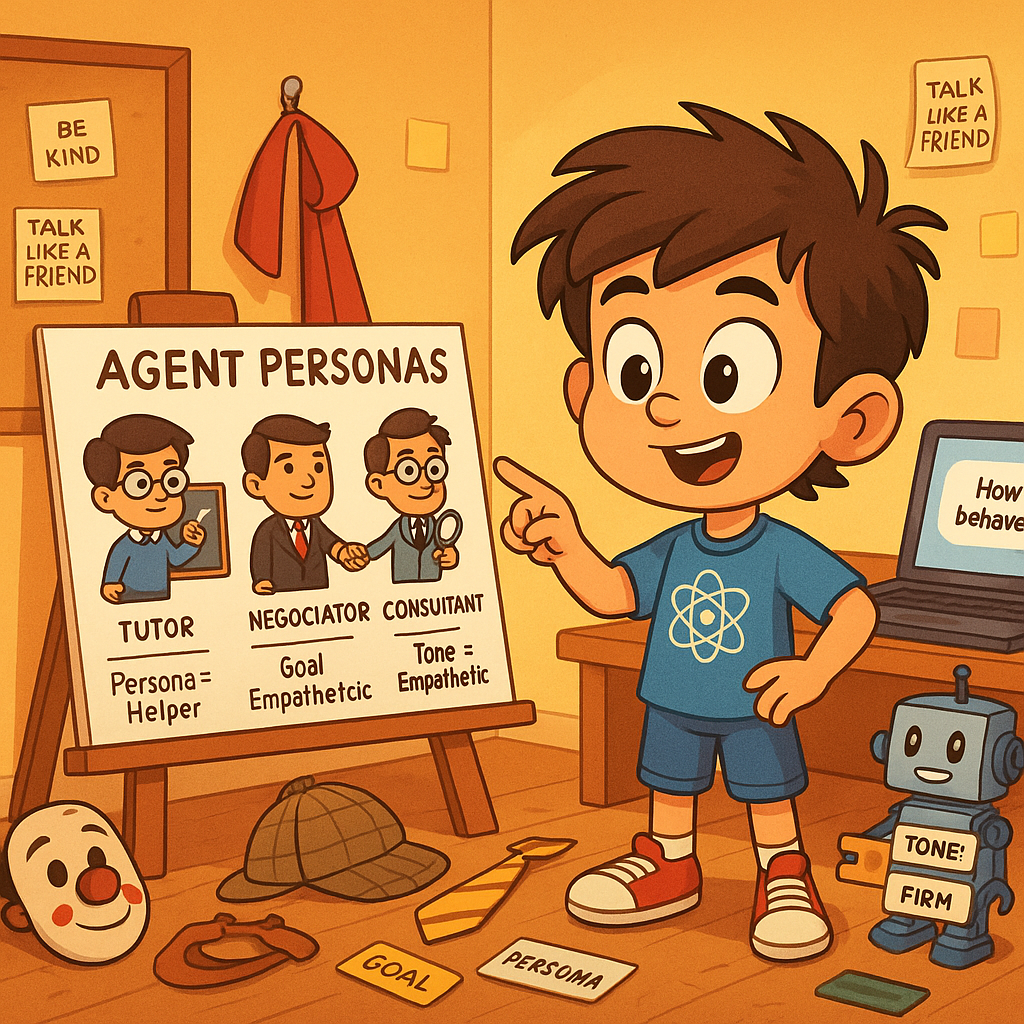
The Three Dimensions of Role Conditioning
Persona Embedding defines who the agent is. Not just that it is an AI assistant, but what kind of professional it embodies. A customer success agent should carry the orientation of someone who genuinely cares about user outcomes. A financial analysis agent should embody precision and a habit of flagging uncertainty.
Goal Priming aligns the agent's priorities with the purpose it is serving. An agent that has been goal-primed for user satisfaction will approach ambiguous situations differently than one primed for efficiency or thoroughness.
Tone Modulation adjusts the energy, register, and style of the agent's communication. The same information communicated in a clinical, technical register versus a warm, accessible one produces very different user experiences.
Role Conditioning in Practice
Teams that have implemented role conditioning report that it is often the single biggest quality improvement they make to an agent, more impactful than model upgrades or retrieval improvements. Users do not just want correct answers. They want to interact with an agent that feels appropriate to the context.
Conclusion
As AI agents become more prevalent, the ones that succeed will be distinguished not just by what they can do but by how they do it. Role conditioning is how you give an agent character, and character is increasingly the differentiator between an agent users trust and an agent they tolerate.