
Introduction: Single Prompts Are Obsolete
The era of single-shot prompting is over. What powers reliable, production-grade agents today is not a better prompt. It is a prompt stack: a layered architecture of instructions, context, memory, and formatting directives that shapes every aspect of agent behaviour.
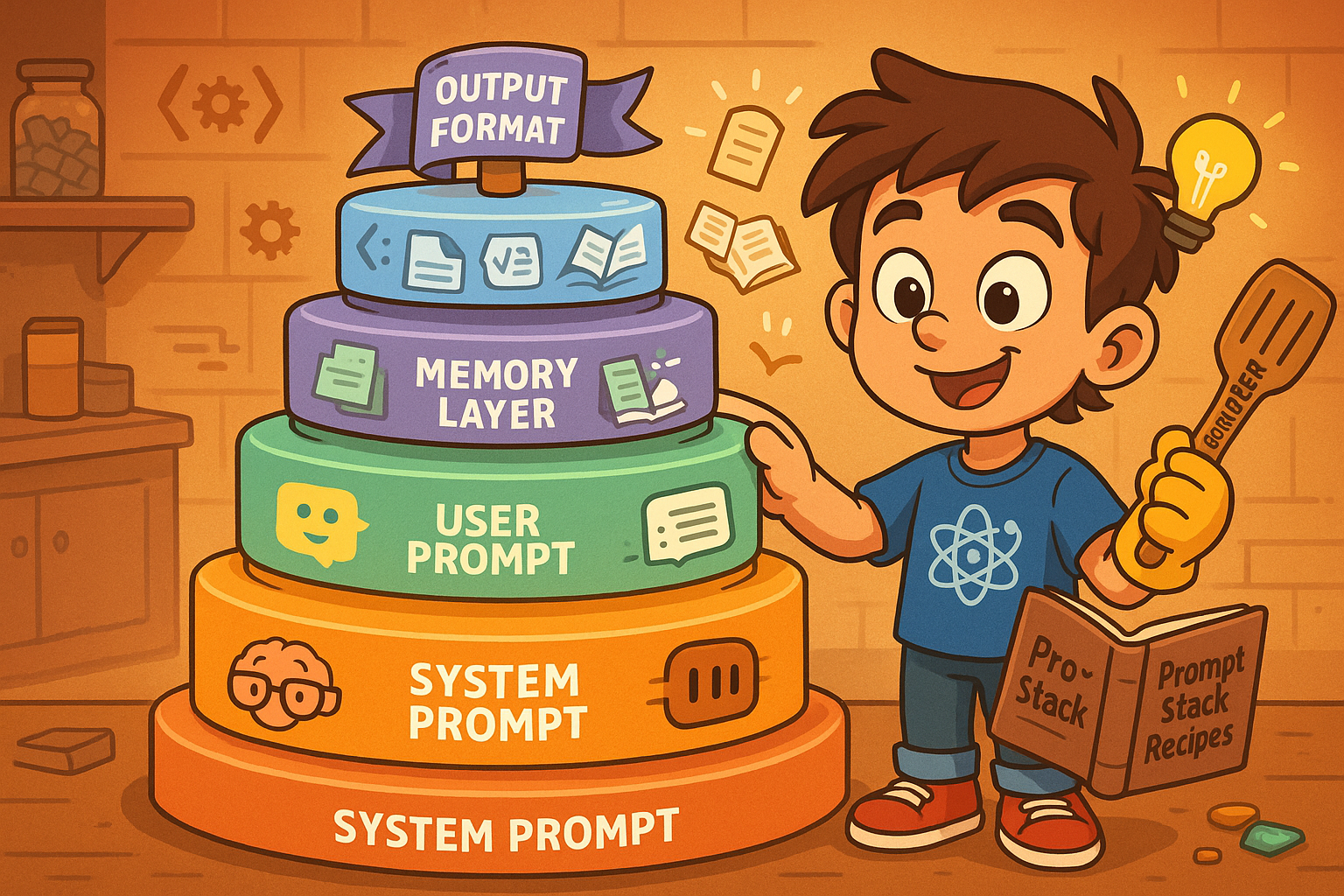
Understanding the Layer Cake
The System Prompt is the foundation. It defines the agent's personality, operating principles, and constraints. It is the stable identity of the agent and does not change between interactions.
The User Prompt is the immediate task layer. It captures the specific goal of the current interaction and changes with every request.
The Memory Layer brings in relevant history. What has this user said before? What decisions were made in previous sessions? This layer is what enables an agent to feel like it knows you.
The Retrieved Context layer pulls in real-time information from external sources: documents, databases, APIs, and knowledge bases. This grounds the agent in current, specific reality rather than general training data.
The Output Formatting layer specifies how the agent should structure its response, whether Markdown, JSON, or a specific template.
Why the Stack Matters More Than Any Single Layer
The power of the prompt stack is not in any individual layer. It is in the interaction between them. A strong system prompt with weak retrieval produces confident but factually unreliable responses. Strong retrieval with no memory produces highly accurate responses that feel impersonal and disconnected.
Practical Starting Point
The most common mistake is trying to put everything in the system prompt. The discipline of separating concerns, identity in the system prompt, task in the user prompt, history in memory, facts in retrieval, format in output instructions, is the fundamental shift that makes agents scalable and maintainable.
Conclusion
Prompt stack design is what makes agents production-ready. The layer cake structure is the architecture that separates fragile chatbots from reliable intelligent agents.