
Introduction: Most AI Failures Are Context Failures
Here is a pattern that repeats itself constantly in organisations adopting AI agents. A team chooses a powerful model, crafts careful instructions, and deploys an agent. Initial results look promising. But over time, responses feel generic and inconsistent. The team concludes the model is not good enough. In most cases, the model is not the problem. The context is.
Context Is Not a Blob, It Is a Stack
The most common mistake in building AI agents is treating context as a single block of information. Developers dump everything they think the agent might need into the system prompt and hope for the best.
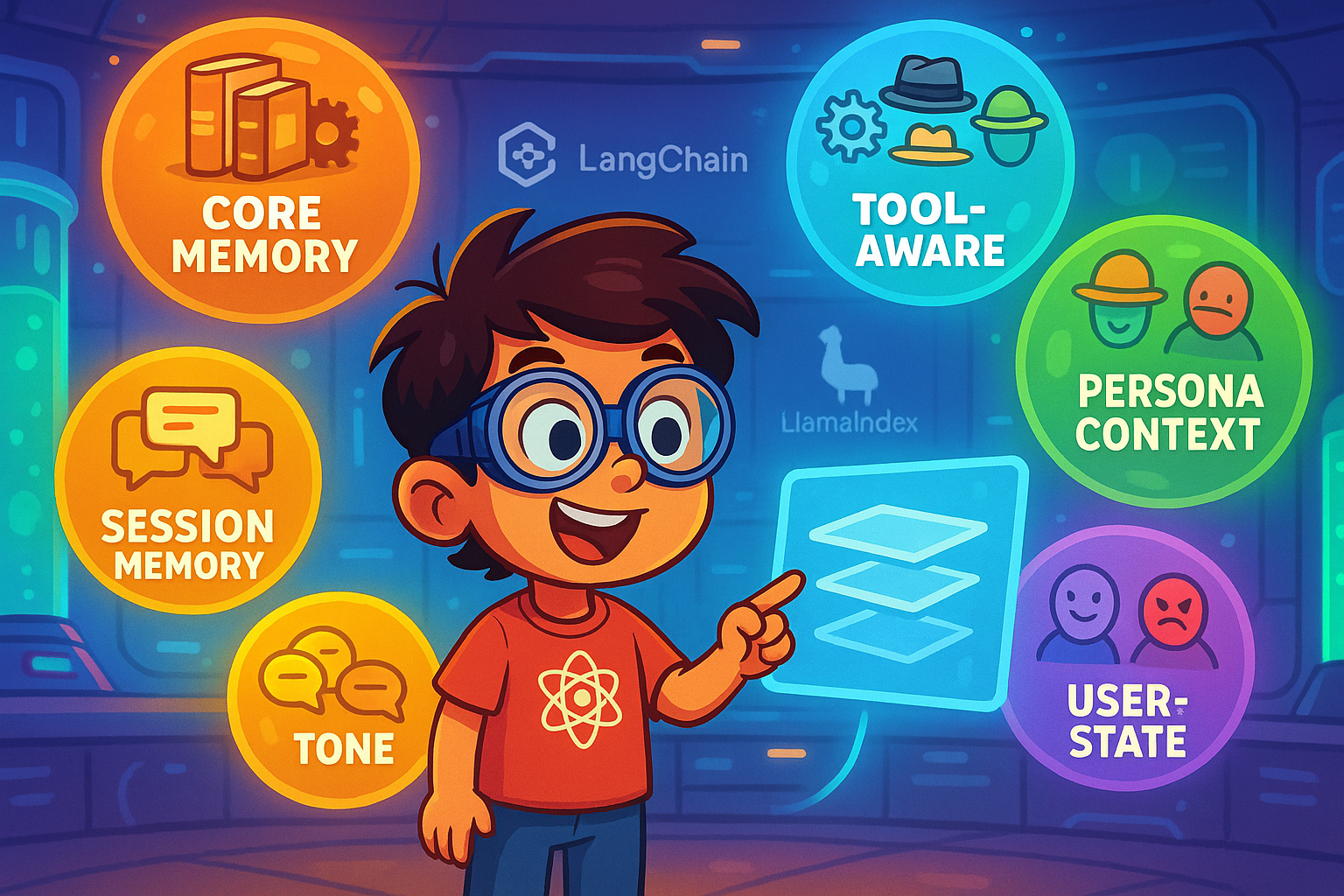
The right mental model is a layered stack, where each layer serves a distinct purpose.
Core Memory is the agent's persistent knowledge base: brand guidelines, product specifications, organisational norms. Session Memory captures what has happened in the current interaction. Tool-Aware Context tells the agent what capabilities are currently available. Persona and Role Context defines who the agent is in this interaction. User-State Context captures what the system knows about the specific person it is serving.
How LangChain and LlamaIndex Make This Practical
LangChain provides the orchestration layer, enabling developers to chain together retrieval steps, memory modules, tool calls, and LLM interactions in configurable pipelines.
LlamaIndex specialises in the retrieval layer. It provides sophisticated indexing over complex document collections, enabling agents to surface the most relevant information from large knowledge bases with semantic precision.
The Principle That Changes Everything
The core insight of context engineering is simple: more data is not better context. The right data, retrieved with the right precision, at the right moment, is what makes an agent intelligent.
Conclusion
Building effective AI agents means building the environment in which they think. Layered context architecture, powered by tools like LangChain and LlamaIndex, is how production-grade agents maintain the situational awareness that makes them genuinely useful.